DETAILS
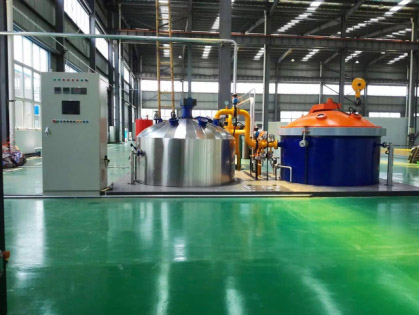
Vacuum pressure immersion equipment is mainly used in the insulation treatment of electrical products. Such as high -voltage
motors, power generators, dry transformers of H -class insulation, electric capacitors, cable insulation materials, etc. Products
such as motor or transformer coils can be impregnated with vacuum pressure, which can be removed in the vacuum phase to
remove water and get off, reduce the effects of impurities such as water and gas on insulation; in the stress immersion stage
Inside the structure, strengthen the overall insulation, thereby improving the level of insulation and improving product appliance
performance.
Vacuum pressure immersion equipment is also used in the material industry to solve the material modification and improve
the organizational structure of the tissue, and achieve the purpose of improving material performance, such as precision
castings such as graphite products, engine cases, fire resistance bricks, and wood. Through the impregnation of unmodisable
pressure, the phenomenon of micro -leakage can be completely solved, which can increase the product's qualification rate and
eliminate the leakage of the workpiece itself. The refractory bricks and wood can change the characteristics of the substrate by
impregnating different imprents (such as asphalt, preservatives, etc.) to achieve different effects.
Vacuum pressure immersion is to put the workpiece into the vacuum pressure vessel, remove the air in the workpiece in
the workpiece, and then inject the impregnation liquid into the vacuum tank through the pressure difference or transport pump.
The purpose of full impretion.
Based on technologies such as pressure vessels, vacuum, pressure, refrigeration, heating, and automatic control, carefully
designed and manufactured.
A full set of devices use PLC and touch screen. Realize the full automation of measurement and control.
Install a security alarm and lock protection device to ensure safety.
Technical Parameters:
Dimension mm | Ultmate vacuum | Leakage Rate | Heating(℃) | Cooling | Working pressure | Remarks |
φ800*1200 | ≤500Pa | ≤100Pa.L/S | Optional | Optional | ≤0.6 | for H model dry Transformer |
φ1200*1600 | ≤500Pa | ≤100Pa.L/S | Optional | Optional | ≤0.6 | for H model dry Transformer |
φ1600*1800 | ≤500Pa | ≤100Pa.L/S | Optional | Optional | ≤0.6 | for H model dry Transformer |
φ1800*2000 | ≤500Pa | ≤100Pa.L/S | Optional | Optional | ≤0.6 | for H model dry Transformer |
φ2000*2200 | ≤500Pa | ≤100Pa.L/S | Optional | Optional | ≤0.6 | For all models |
φ2400*2200 | ≤100Pa | ≤100Pa.L/S | Optional | Optional | ≤0.6 | For all models |
φ2500*2500 | ≤100Pa | ≤100Pa.L/S | Optional | Optional | ≤0.6 | For all models |
φ3200*2500 | ≤50Pa | ≤100Pa.L/S | Optional | Optional | ≤0.6 | For all models |
φ3500*3000 | ≤50Pa | ≤100Pa.L/S | Optional | Optional | ≤0.6 | For all models |
φ5000*2100 | ≤50Pa | ≤100Pa.L/S | Optional | Optional | ≤0.6 | For Large wind motor |
φ5400*5500 | ≤50Pa | ≤100Pa.L/S | Optional | Optional | ≤0.6 | For Large wind motor |